Gardens & FarmsNews & Events
Swale Planting Advances Biodiversity at GrassRoots Garden
November 2, 2026
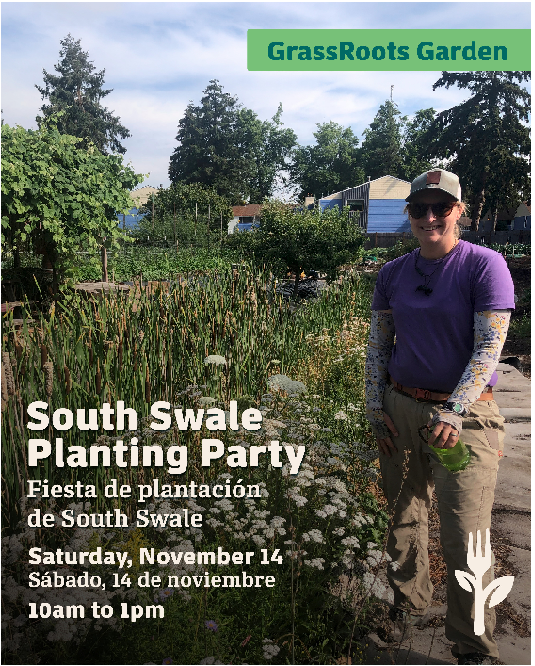
Food for Lane County’s GrassRoots Garden recently celebrated 35 years of growing in—and for—the community. Each year, this 2.5-acre farm welcomes more than 2,500 neighbors who participate in gardening, cooking and community building, and provides more than 50,000 pounds of fresh produce for the Dining Room and our Community Supported Agriculture program. The Garden is a learning space too, and on November 14 community members are invited to join us as we wrap up our South Swale Planting project.
The question has been posed to GrassRoots Garden staff: Why devote space to swale plantings, when putting in a culvert and planting food crops over the top would be faster and easier?
Emily Johnson, GrassRoots Garden Field Coordinator, emphasizes that we are planting food crops—just not food crops for humans, and for good reason.
The Isolation Approach
From a broader perspective, a farm is simply a managed ecosystem. Most large-scale industrial farming tries to simplify the ecosystem down to just two pieces: the plant crop, and the consumer (humans or livestock). Since plants did not evolve to grow in isolation from other life forms, if a farmer focuses on isolating those two pieces, they must take on the roles of all the other players in a healthy, more complex ecosystem. They must add fertilizer to feed the plants, and pesticides and fungicides to rid the growing space of the pests and diseases that also want to feed off the crops.
But the isolation approach requires a lot of resources to maintain. Fertilizer, pesticides, and fungicides are expensive and use a lot of energy to produce and apply, and a simplified ecosystem is not resilient when unexpected events occur. An alternative method of farming involves managing a complex ecosystem that encourages a greater diversity of organisms to bring stability and abundance to the system with fewer inputs, which is where the swale comes in.
The Biodiversity Approach
At GrassRoots we focus on increasing two main areas of biodiversity: soil biodiversity, which we tend through our composting and cover cropping program and which we’ll cover in a future post; and “critter” biodiversity (insects, amphibians, birds and reptiles) maintained through habitat plantings.
GrassRoots Garden’s swale and hedgerow plantings are specifically designed to increase critter biodiversity by providing undisturbed habitat refuges on site for them to live. This contrasts with our crop production beds, which we are often disturbing through the process of planting, tending, and harvesting crops.
There are myriad benefits of a diverse array of critters living on site. A few of GrassRoots’ staff’s favorites:
- Garter snakes eat slugs! Need we say more?
- Chickadees and Western Bluebirds eat thousands of caterpillars when feeding their chicks in the spring, including cabbage moth caterpillars who can do serious damage to brassica crops
- Yellow jackets and wasps take over the caterpillar patrol once the bird hatchlings fledge. They diligently scour the nursery all summer, pulling caterpillars off fall and winter brassica starts
- Ladybugs and their larvae, as well as hoverfly larvae, eat aphids
- Native bees and flies provide pollination services all growing season long! Special shout out to Mason bees, who get to work pollinating our early blooming orchard trees in colder and wetter weather than honeybees will tolerate.
By embracing a complex ecosystem and creating habitat to sustain it, we have a lot of help keeping pest populations at a manageable level that doesn’t result in problematic crop damage. And while GrassRoots Garden staff occasionally will need to intervene if a pest population explodes, it doesn’t explode nearly as quickly as it might in a simplified ecosystem because there are natural predators living at the Garden who slow it down.
Not only does staff spend less time, energy and money managing pests, but the Gardens also provide valuable habitat to critters that would otherwise not have many good places to live within the Eugene city limits. Especially for migrating species of insects and birds, GrassRoots Garden is an oasis in a food desert.
Join us November 14
Good land stewardship and good agricultural practice go hand in hand, and we invite you to come out to the Garden to see it in action! Food for Lane County staff will be planting the final stretch of the swale at GrassRoots on November 14th from 10am until noon. If you are interested in helping out, or just coming to see what we are up to, we would love to have you join us! Sign up via Mobilize: https://mobilize.us/s/WLceUj
Thanks to Upper Willamette Soil and Water Conservation District, the Xerces Society, and Doak Creek Nursery for support in swale building.
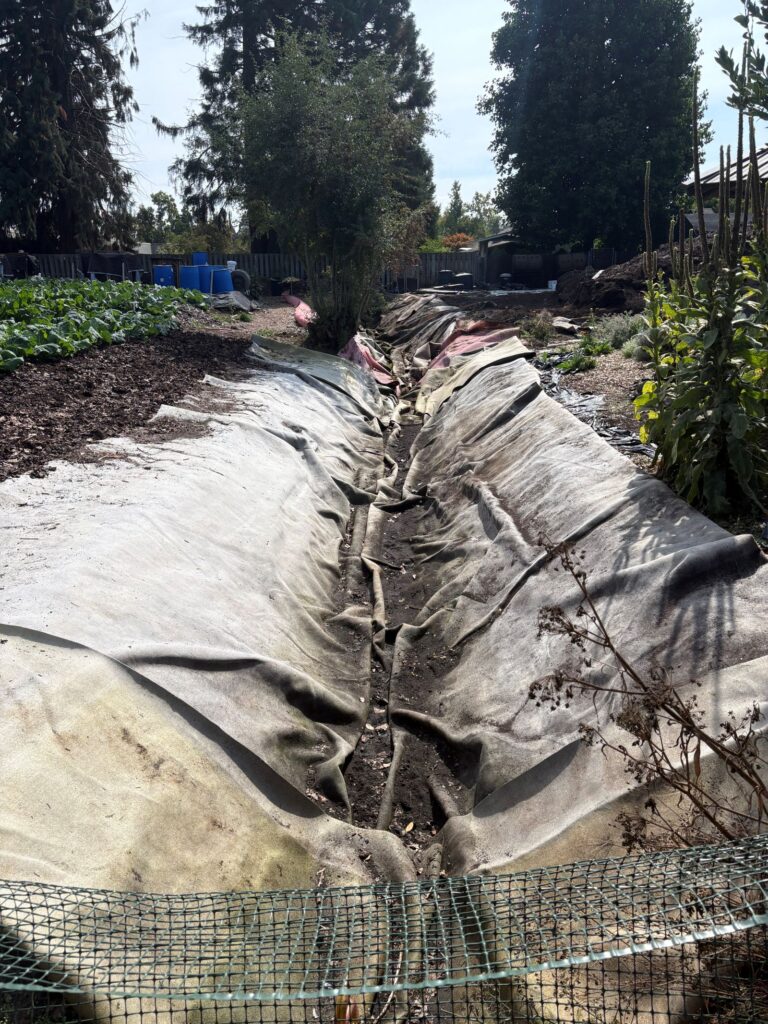
Image caption: The South Swale in early phases of preparing the space
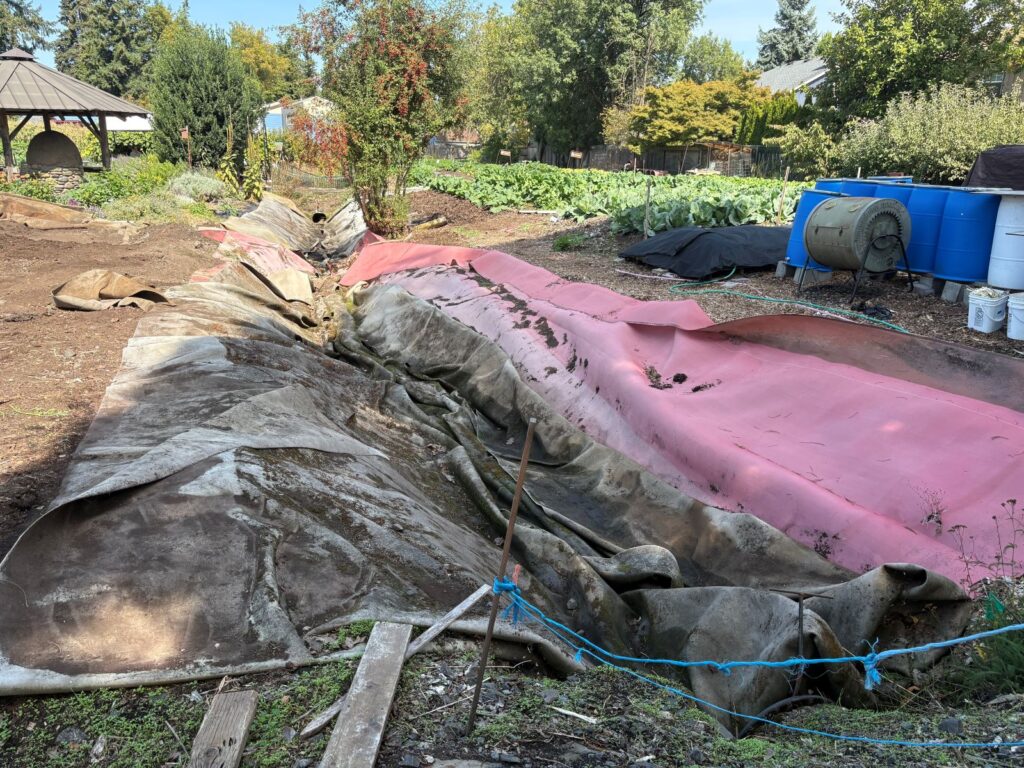
Image caption: Progress being made on the South Swale
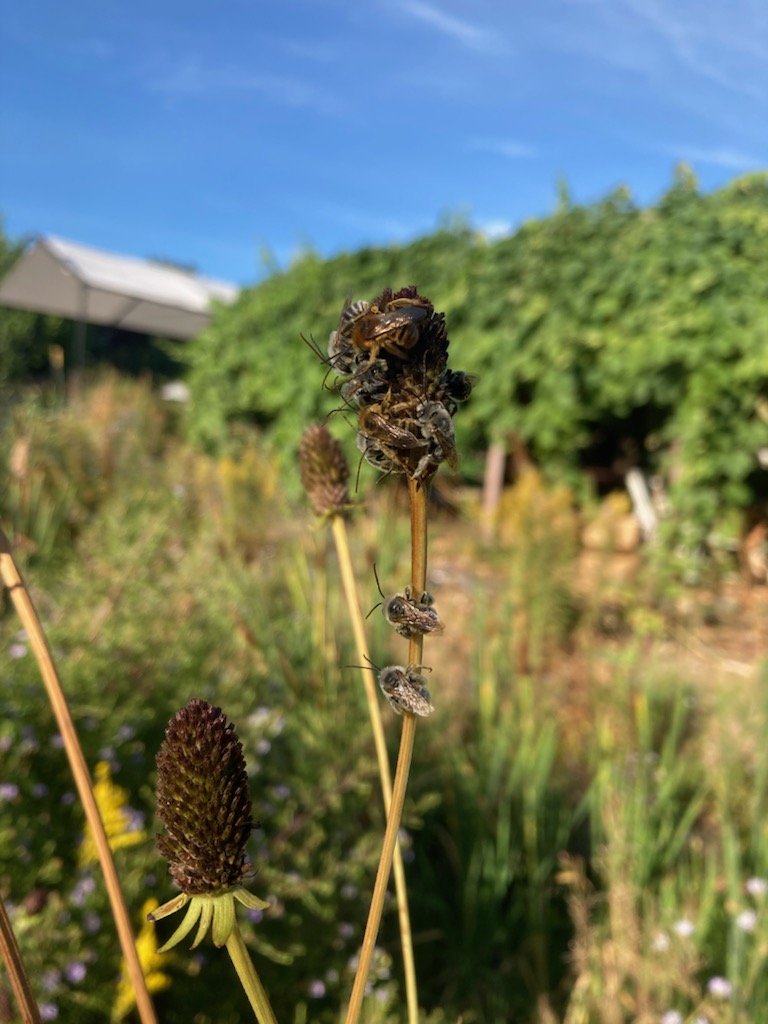
Image caption: “Critter diversity”: long-horned bees napping on a native rudbeckia
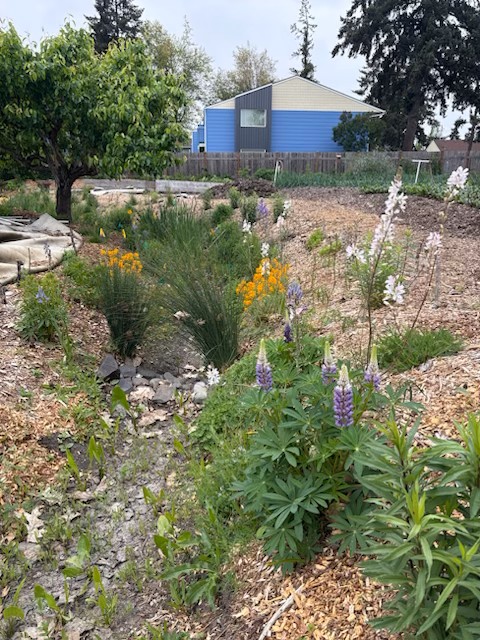
Image caption: More progress on the South Swale